Starting a custom clothing production usually begins with a simple idea.
A hoodie with a certain fit. A T-shirt that should feel more premium than standard blanks.
A full collection for your brand. Teamwear for a company. A product that does not exist exactly the way you imagine it yet. That is the exciting part, but before a project can be calculated, sampled or produced, there is one thing that matters more than many people expect: clarity.
You do not need to have every technical detail ready before reaching out to a manufacturer. You do not need a perfect tech pack from the first message. And you do not need to know every fabric term, stitching detail or production step.
But the more clearly you can explain what you want to create, the easier it becomes to understand the right production route, estimate costs, plan the timeline and avoid misunderstandings later.
At LEMUTA, we often see that delays do not start in bulk production. They start much earlier, when product details, quantities, artwork, timelines or expectations are still unclear.
A good start does not mean everything has to be perfect.
It means the most important information is easy to understand.
Start with the product itself
The first thing you should define is the product you want to create.
This sounds simple, but it makes a big difference.
A “T-shirt” can mean many different things. It could be a lightweight promotional shirt, a heavyweight oversized streetwear piece, a washed vintage-style tee or a premium company shirt with embroidery and custom labels.
A “hoodie” could be a regular hoodie, a boxy oversized hoodie, a zip hoodie, a cropped hoodie, a heavyweight hoodie or a fully custom product with special panels, pockets, drawcords or trims.
So instead of only saying:
“We want to produce a premium hoodie.”
Try to describe the idea more clearly:
“We want to produce an oversized heavyweight hoodie with a boxy fit, dropped shoulders, chest embroidery, a large back print and a soft but structured fabric.”
That kind of description gives the project a much better starting point.
You do not need perfect technical wording. What matters is that the direction is understandable.
Visual references help more than long explanations
In custom clothing production, visuals are extremely helpful.
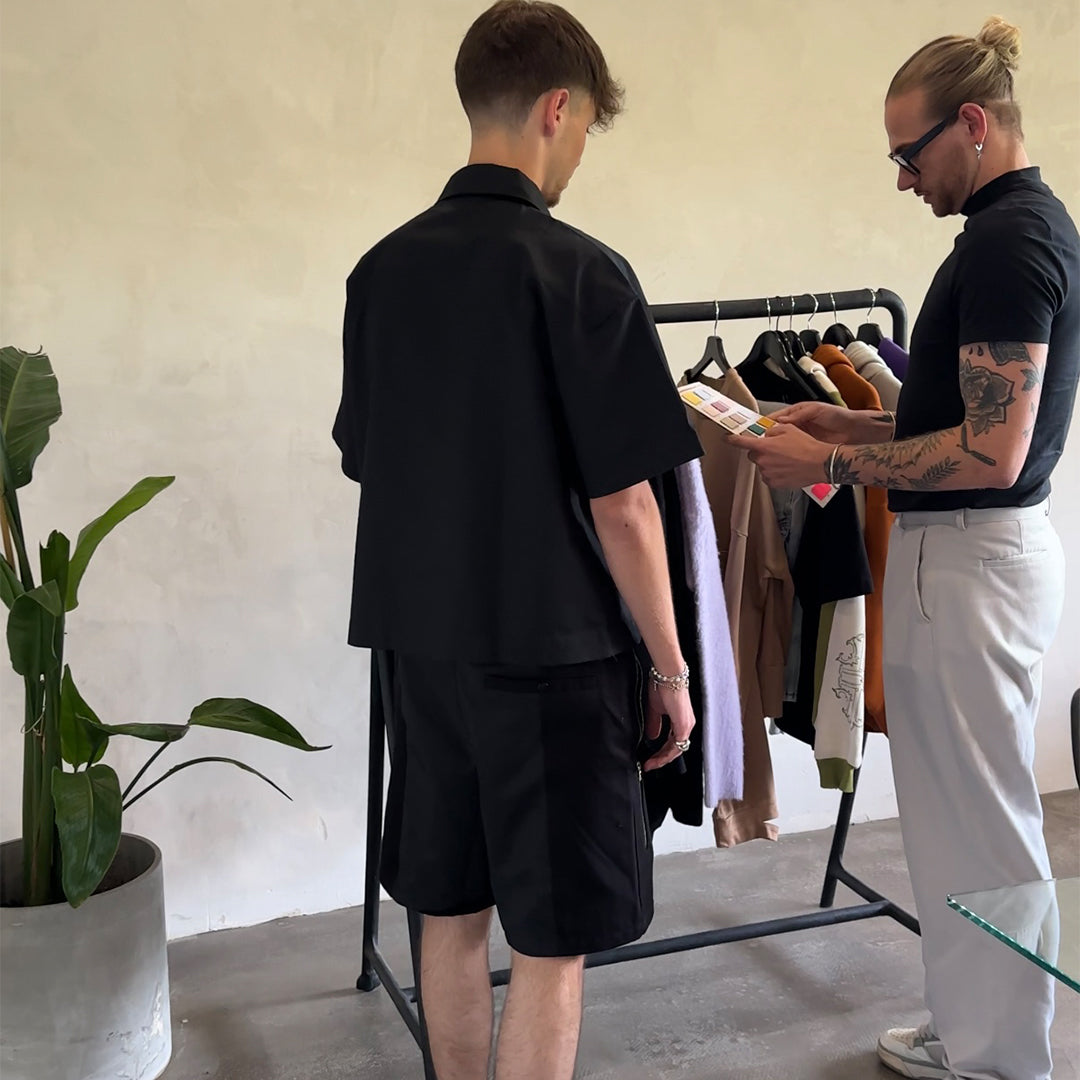
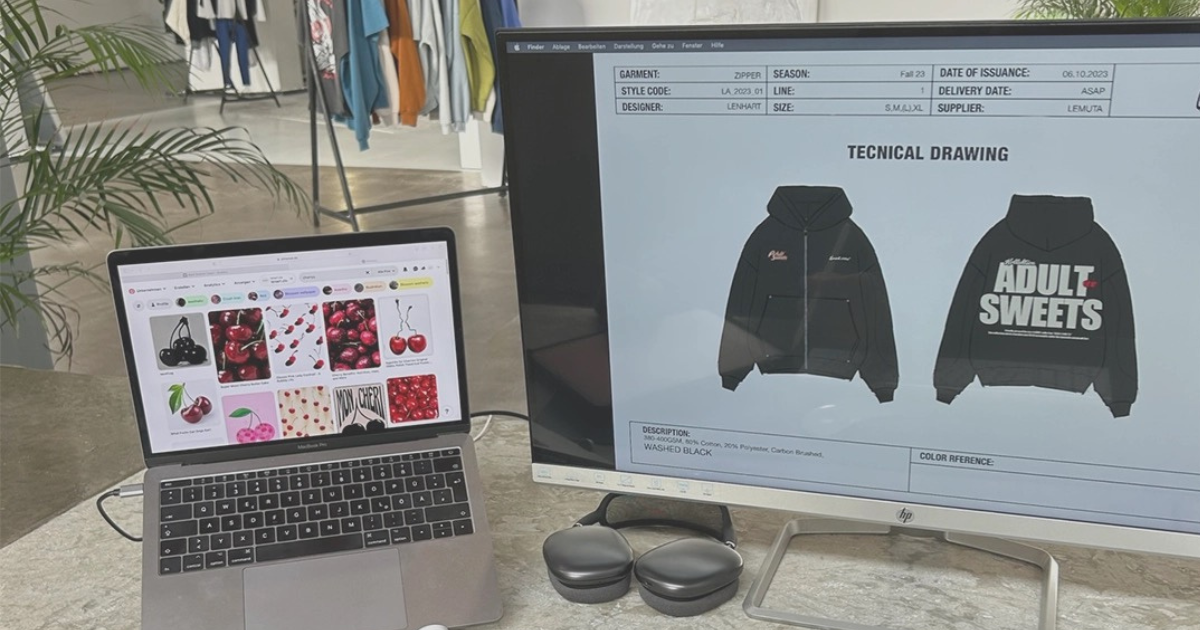
Mockups, sketches, screenshots, reference products or moodboards can make your idea much easier to understand. They help show the fit, shape, fabric feeling, print placement, color direction or general style you have in mind.
A reference image can answer questions that are hard to explain in words.
For example:
- Should the fit be boxy or long?
- Should the fabric look smooth or textured?
- Should the shoulder be dropped?
- Should the print be oversized or subtle?
- Should the garment feel clean, vintage, sporty or premium?
References do not mean copying another product. They simply help communicate the direction.
Especially at the beginning, a rough mockup is often better than a long description without visuals.
Quantities are needed early
One of the first questions in almost every production project is quantity.
This is not only about the total number of pieces. It is also about the quantity per style and color.
For example:
| Product | Color | Quantity |
|---|---|---|
| Oversized Hoodie | Black | 100 pcs |
| Oversized Hoodie | Grey | 100 pcs |
| Heavyweight T-Shirt | White | 150 pcs |
| Shorts | Navy | 75 pcs |
This matters because production pricing and minimum order quantities are usually calculated per product, color and style.
Custom production often requires higher minimum quantities than blank customization, because patterns, fabrics, sampling and production setup are created specifically for your project.
At LEMUTA, the exact MOQ depends on the product, fabric, color, branding method and complexity. As a general direction, custom production often starts around 100 pieces per style and color, while some product categories can require higher quantities.
If you do not know the final quantity yet, a realistic range is still helpful.
For example:
“We are planning around 100 to 200 pieces per style.”
That is much easier to work with than no quantity at all.
Think about the fit before thinking about every detail
Fit is one of the most important parts of custom clothing production.
A product can use a good fabric and still feel wrong if the fit does not match the idea.
Before starting, try to think about how the garment should sit on the body.
Should it be oversized, relaxed, boxy, cropped, slim, longline or regular? Should the shoulder be dropped? Should the sleeves be wider? Should the body feel structured or soft?
If you already have a size chart or measurements, that is very helpful. If not, references can help a lot.
For more complex custom products, a tech pack or measurement table becomes important later in the process. But at the beginning, even a clear fit direction can already prevent a lot of confusion.
A simple sentence like this can help:
“We want the T-shirt to have a boxy oversized fit, but not too long in the body.”
That gives a much clearer direction than simply saying “oversized”.
Fabric direction matters, even without technical knowledge
You do not need to know every fabric construction before starting.
But you should have a feeling for what the product should be like.
Should it feel lightweight or heavyweight?
Soft or structured?
Stretchy or firm?
Smooth or textured?
Warm or breathable?
For T-shirts and hoodies, GSM is often part of the discussion. GSM describes the fabric weight in grams per square meter. But GSM alone does not tell the full story.
A 300 GSM T-shirt can feel very different depending on yarn, knit, finishing and wash.
That is why it is often more helpful to describe the desired feeling.
Instead of only saying:
“We want 300 GSM.”
You could say:
“We want a heavyweight T-shirt that feels structured, premium and not too thin or too soft.”
This gives a manufacturer a much better idea of what you are trying to achieve.
Artwork and placement should be as clear as possible
If your product includes print, embroidery, patches or other branding details, the artwork needs to be prepared properly.
High-quality files make the process easier. Vector files are usually best for logos and graphics, especially for embroidery, screen print or clean placement work.
Useful file formats can include AI, EPS, PDF, SVG or high-resolution PNG files.
But the file itself is only one part.
Placement is just as important.
A chest logo can look completely different depending on its size and position. A back print can feel balanced or too low. Sleeve prints, neck prints and embroidery placements need clear instructions before sampling or bulk production.
Simple mockups with approximate placement are already very helpful at the beginning.
Later, the exact size and position can be defined more precisely.
Branding details can change the whole product feeling
Custom clothing is not only about fabric and fit.
Small branding details can make the final product feel much more professional.
Depending on your project, these details can include neck labels, care labels, woven labels, size labels, hangtags, packaging, patches, custom trims, drawcords or zipper details.
You do not need all of these details for every project.
For a first production, it can be smarter to focus on the details that really matter instead of making the product too complicated from the beginning.
A clean neck label, a well-placed embroidery and thoughtful packaging can already make a product feel much more considered.
The goal is not to add as many details as possible.
The goal is to choose the details that support the product and the brand.
Your timeline should be shared from the beginning
If you have a fixed launch date, event date or campaign deadline, communicate it early.
Custom production takes time because the product usually needs to be reviewed, calculated, sampled, adjusted, approved, produced, checked and shipped.
A simple T-shirt has a different timeline than a denim jacket, knitwear piece, custom hoodie or product with special washing and trims.
Sharing your deadline early helps everyone understand whether the project is realistic.
Sometimes custom production is the right route. Sometimes the timeline is too tight and blank customization may be the better option. Sometimes a product needs to be simplified to meet the deadline.
In production, honest planning is always better than a rushed promise.
Budget direction helps avoid unrealistic planning
Many people avoid talking about budget at the beginning, but it is actually very helpful.
A target price or budget direction does not mean everything is fixed. It simply helps understand what kind of solution makes sense.
The same hoodie can be developed in many different ways. Fabric weight, wash, embroidery, print, labels, trims, packaging and quantity all influence the final price.
If the target price is limited, the product has to be planned differently than if the focus is maximum detail and premium construction.
A clear budget direction helps avoid unnecessary back-and-forth and unrealistic concepts.
It also helps decide whether full custom production is the right choice, whether blank customization would be more suitable or whether some details should be simplified.
A tech pack is helpful, but not always needed from the first message
A tech pack is one of the most useful documents in custom clothing production.
It usually includes technical information such as measurements, materials, construction details, artwork placements, colors, labels and finishing details.
If you already have a tech pack, the quotation and development process can usually be much more accurate.
If you do not have one yet, that does not mean you cannot start.
Many brands begin with mockups, references and a clear product idea. For simple projects, that can be enough for the first conversation.
For more complex custom products, a tech pack becomes more important as the project moves forward.
The more specific the product is, the more specific the information needs to be.
What a good first inquiry can include
A first inquiry does not need to be perfect.
But it should give enough information to understand the project.
A helpful first inquiry could include:
| Information | Example |
| Product | Oversized hoodie |
| Quantity | Around 100–200 pieces |
| Color | Black or washed grey |
| Fit | Boxy, oversized, dropped shoulders |
| Fabric direction | Heavyweight, soft but structured |
| Branding | Chest embroidery and back print |
| Artwork | Mockups or logo files |
| Timeline | Needed in around 10–12 weeks |
| Budget direction | Target price, if available |
| Delivery | Germany |
| References | Fit images, product examples or moodboard |
This does not need to be final.
It simply gives the project a clear starting point.
What you do not need before reaching out
You do not need to know everything before contacting LEMUTA.
You do not need a perfect tech pack, final size breakdown, finished artwork files and exact fabric specifications from the first message.
It is completely fine to start with what you already have.
But the more information you can provide, the better we can guide you.
A rough idea can become a clear production plan.
A mockup can become a proper product direction.
A simple reference can help define fit, fabric and details.
The important part is not perfection.
The important part is clarity.
Final thoughts
Custom clothing production works best when creativity and clarity come together.
You do not need to be a production expert before starting. But you should understand what you want to create, how many pieces you are planning, what timeline you have and what matters most for your project.
A clear start helps make quotations more accurate, sampling more focused and production more reliable.
It also helps avoid misunderstandings later in the process.
At LEMUTA, we support brands and companies from the first idea to the final product. Whether you already have a full tech pack or only a rough concept, we can help you understand what information is needed and which production route fits your project best.
Planning a custom clothing project?
Send us your idea, mockups, quantities, timeline and any references you already have.
We will review your project and help you understand the next step.